King, Wallace Turn Ideas Into Action at NCAA Legacy Lab
September 14, 2026 | Women's Basketball, Women's Gymnastics, Academic Services
NEWS
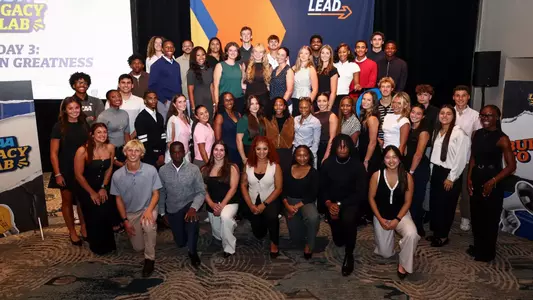
INDIANAPOLIS – Illinois women's gymnastics junior Eden King and women's basketball junior Berry Wallace represented the Fighting Illini at the NCAA Legacy Lab, held Sept. 10-13 in Indianapolis.
The four-day experience challenged student-athletes to think beyond where they are today and begin putting ideas for their futures into action. Through sessions and hands-on activities focused on entrepreneurship, NIL, personal branding, financial literacy, networking, storytelling, and leadership, participants explored how the skills they have developed through sport can create opportunities well beyond competition.
For King and Wallace, that meant stepping into unfamiliar spaces, developing new skills, and leaving Indianapolis with a greater sense of what they are capable of pursuing.
From Interests to Opportunities
King arrived at Legacy Lab with an interest in entrepreneurship but without a clear understanding of how ideas can develop into viable business opportunities. Through the Blueprint to Breakthrough: Business Track, she began filling that gap.
"Entrepreneurship has always been something that I am interested in, but I have never really known where to start or what the process of creating a business really looks like," King said. "This track introduced me to a lot of tools and resources that I can utilize when thinking about potential business ventures and ways to put my ideas into action."
Wallace approached the experience from a different direction. Through the Brand in Motion: NIL Track, she explored how her interests, identity, and platform can become the foundation for a more intentional personal brand. The track focused on helping student-athletes understand their value, identify opportunities, and develop a brand strategy aligned with their goals.
"I have been wanting to build my brand, and this gave me a great foundation to do so," Wallace said. "The NIL track gave me insightful information on how to grow your brand around things you are interested in and to be confident in yourself."
While their tracks differed, both came away thinking more intentionally about how their existing interests could become future opportunities.

Getting Comfortable Being Uncomfortable
Legacy Lab didn't just ask participants to learn about entrepreneurship; it challenged them to practice it.
That became especially apparent during the Hustle Bowl, an experiential component that culminated with teams presenting their ideas in a pitch competition on the program's final day.
For Wallace, the experience required creativity, communication, and a willingness to put herself in an unfamiliar position.
"We were able to come up with an idea like 'Shark Tank' and had to pitch our idea to judges," Wallace said. "This challenged me to get out of my comfort zone and be creative and share our idea for a product in a professional manner."
The experience reinforced a broader lesson for Wallace about trusting her abilities and being willing to speak up.
"My biggest takeaway is to always use my voice and be confident in my leadership skills," Wallace said. "Networking is very important and will help you along the way. By fostering these relationships, it will help you for the rest of your life."
King found a similar message in closing keynote speaker Will Baggett, who challenged participants to take action rather than wait until they feel completely prepared. Baggett delivered the closing keynote following the Hustle Bowl championship.
"His message motivated me to start small and dedicate time each week to learning, brainstorming, and creating something I am genuinely passionate about, rather than waiting until I feel completely ready," King said.

Seeing What's Possible Beyond Sport
Throughout the weekend, King and Wallace also began making stronger connections between who they are as student-athletes and who they can become beyond athletics.
"The Legacy Lab really showed me that everything I am learning through athletics will aid me as I move forward into my future career," King said. "It also showed me that my identity extends far beyond being an athlete and that I have a lot to offer in other aspects of my life."
King shared one of the most valuable outcomes was learning how to move from identifying a problem to considering a solution and developing it into a potential business model.
"Hearing the stories of so many entrepreneurs showed me that I don't need to have a groundbreaking or million-dollar business idea to be successful," King said. "Now that I have the tools and knowledge to take an idea from a problem to a potential business model, I feel much more equipped and confident to pursue my ideas moving forward."
Wallace similarly left with a broader view of what is possible for student-athletes. Seeing entrepreneurs who had once been in her position helped connect the lessons of the weekend to her own aspirations.
"Going to the NCAA Legacy Lab changed my perspective of what we as student-athletes are truly capable of," Wallace said. "Seeing people who were once in my shoes become entrepreneurs and take a dream and make it reality has challenged me."
Wallace plans to apply what she learned in the NIL track to more intentionally build her personal brand, grow her platforms, and connect with potential company partners. King, meanwhile, plans to dedicate time to brainstorming ideas, identifying problems she could help solve, and using the tools she gained at Legacy Lab to begin developing potential business ventures.
For both, the experience reinforced that preparing for life beyond sport does not have to wait until their athletic careers are over.
Experiences like the NCAA Legacy Lab support the mission of Illini Way Student-Athlete Development by creating opportunities for Illini student-athletes to explore their interests, develop transferable skills, and take meaningful steps toward what comes next.